Service File Dossier de service
- Reg. #Matr. # 2323
- NameNom Everett John “Klondike John” Ward
- BornNé c. 1864 · Kentville, Nova Scotia v. 1864 · Kentville, Nouvelle-Écosse
- EnlistedEnrôlé December 6, 1889 · Regina, Saskatchewan · NWMP 6 décembre 1889 · Regina, Saskatchewan · NWMP
- First PostingPremière affectation Fort Saskatchewan · Early 1890s Fort Saskatchewan · Début des années 1890
- Discharge & ReturnLibération et retour Term expired June 1894 · Re-engaged October 1894 after four months civilian life Terme expiré juin 1894 · Réengagé octobre 1894 après quatre mois de vie civile
- Yukon ExpeditionExpédition au Yukon Departed Regina June 1, 1895 · Under Inspector Charles Constantine · Arrived Fort Cudahy July 24, 1895 · Helped construct first permanent NWMP post in Yukon Territory Départ de Regina le 1er juin 1895 · Sous l’inspecteur Charles Constantine · Arrivé à Fort Cudahy le 24 juillet 1895 · A participé à la construction du premier poste permanent de la NWMP au Yukon
- FamilyFamille Married Elizabeth V. Redden, April 1899 · No record of children Maré à Elizabeth V. Redden, avril 1899 · Aucun enfant connu
- After ServiceAprès le service Resigned from NWMP · Prospected in Klondike · Struck gold · Built Ward’s Mansion, Kentville, NS · c. 1904 Démission de la NWMP · Prospection au Klondike · A trouvé de l’or · Construction du manoir Ward, Kentville, N.-É. · v. 1904
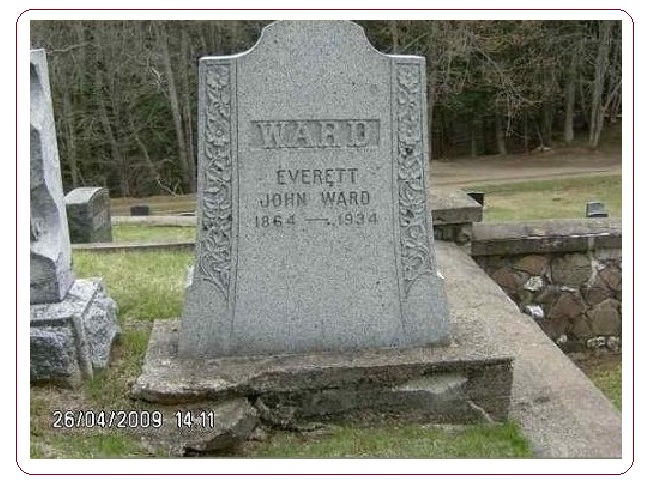
- DiedDécédé 1934 · Age c. 69 · Buried at Oak Grove Cemetery, Kentville, Nova Scotia 1934 · Àge v. 69 ans · Inhumé au cimetière Oak Grove, Kentville, Nouvelle-Écosse
Reg.#2323, Constable Everett John Ward—known across the North as “Klondike John”—embodied the restless spirit often seen among the early members of the North-West Mounted Police (NWMP). Born around 1864 in Kentville, Nova Scotia, Ward appeared destined to wander. When he enlisted with the NWMP in Regina on December 6, 1889, he expected to serve only a few steady years. Yet duty and structure never held him for long.
By the early 1890s, while posted to Fort Saskatchewan, Ward often spoke of the next horizon—places where the Northern Lights burned wilder and the world still felt unfinished. Every posting represented a beginning rather than an end.
When his five-year term expired in June 1894, Ward declined to re-engage. He returned to Regina, attempting civilian life, but lasted only four months. In October, restlessness pulled him back into uniform. This brief return to civilian life illustrated a familiar sentiment among early NWMP men: a deep draw toward the frontier and the discipline of service.
Ward later married Elizabeth V. Redden in April 1899. No record of children survives.
By the mid-1890s, news of gold discoveries in the Yukon began to spread. Tales of sudden wealth—some wild, some credible—drew the attention of men like Ward. As recounted in North-West Mounted Police: A Tradition in Scarlet, almost one thousand prospectors had reached the Yukon by 1894, followed soon after by missionaries and whiskey traders.
Pierre Berton described this migration vividly in Klondike: The Last Great Gold Rush, 1896–1899: “On the face of it, they were men chasing the will-o’-the-wisp of fortune… They seemed more like men pursued than men pursuing.” (p.17). That description captures Ward’s temperament well—driven by a pursuit of movement as much as by opportunity.
While individuals sought fortune, the federal government confronted the growing lawlessness of the North. In 1895, Inspector Charles Constantine was dispatched to establish the first permanent NWMP post in the Yukon. His detachment included Inspector Strickland, Constable Wills, and sixteen other members—among them Ward.
Departing Regina on June 1, 1895, the men travelled south to Seattle, where they boarded the Excelsior for St. Michael, Alaska. They arrived on July 3 and continued upriver aboard the Portus B. Weare, reaching Fort Cudahy on July 24. Ward was among those who constructed the barracks that stood as the first permanent NWMP presence in the territory.
By October 1895, the detachment had completed eight buildings, including a 70-by-22-foot barracks. Their work established a base for law and order in what would soon be the center of the Klondike Gold Rush.
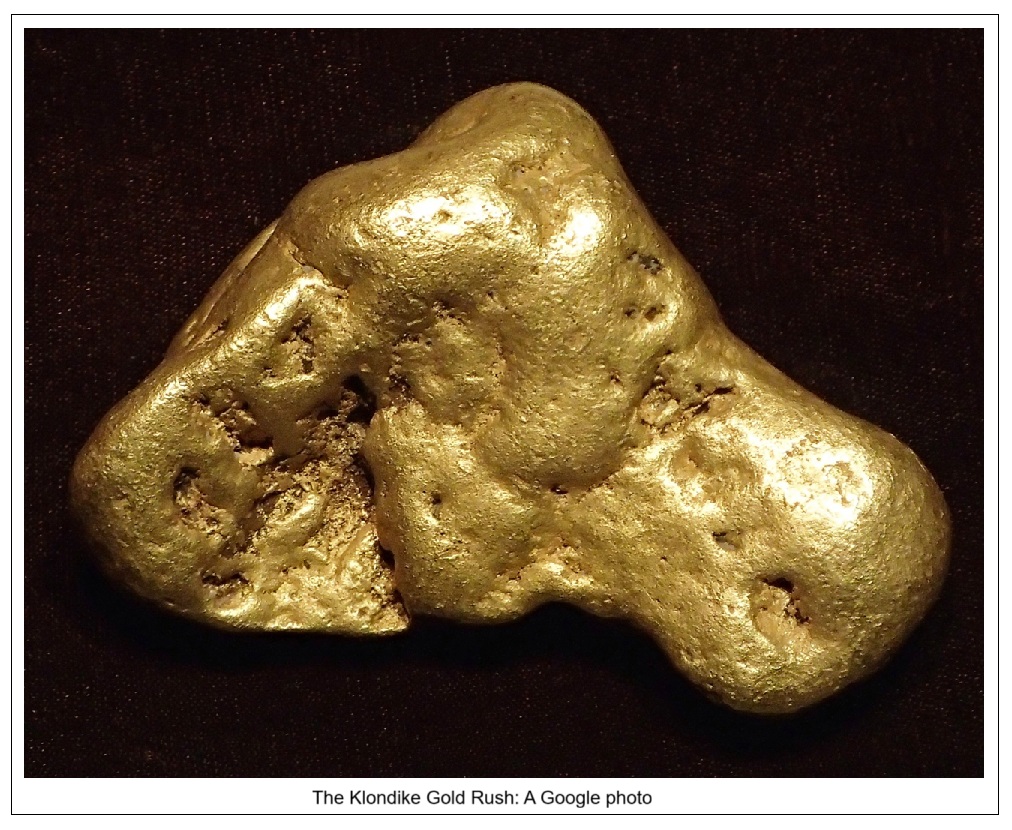
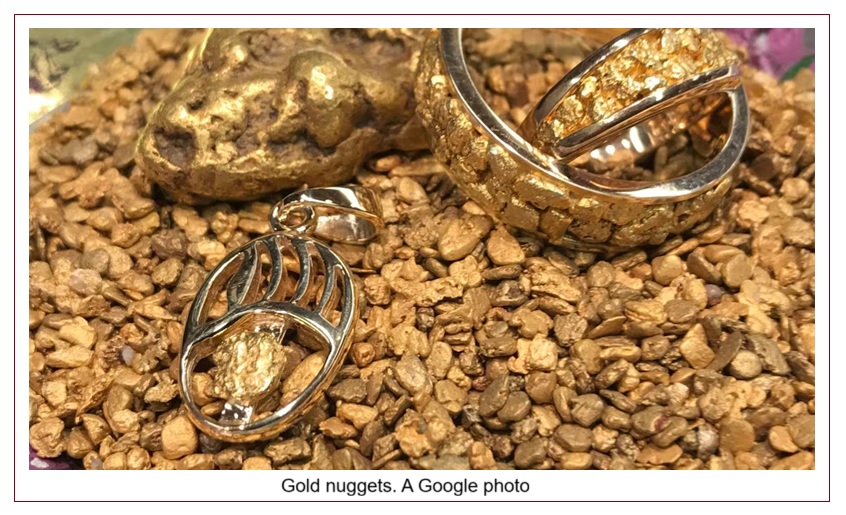
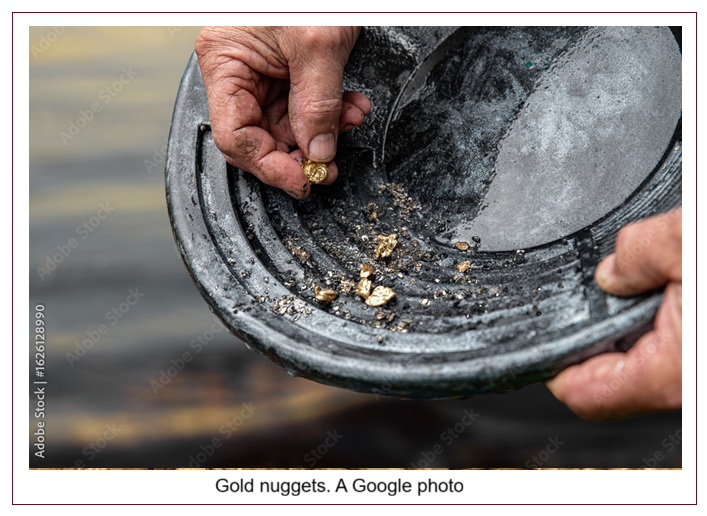
For Klondike John Ward, the North proved irresistible. He eventually resigned from the NWMP to join the prospectors, and according to RCMP historian Jack White, he struck gold. Restlessness, once the hallmark of an unsettled life, had found material reward.
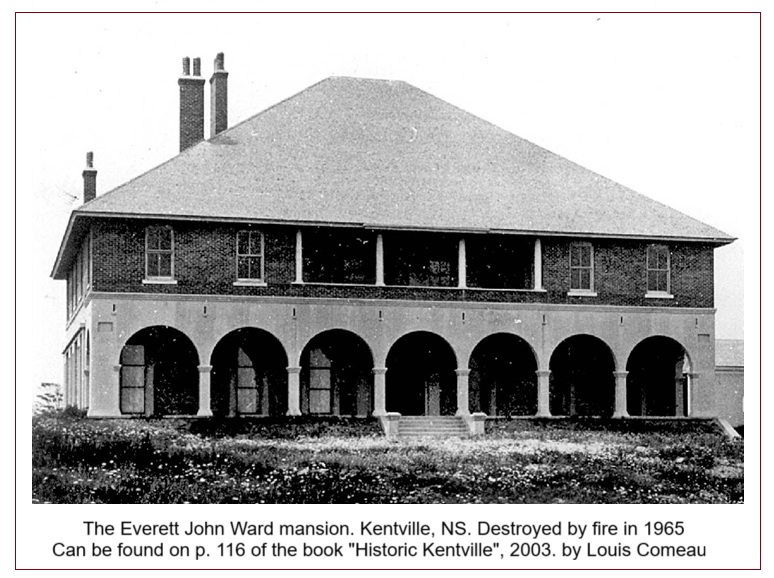
Returning to Nova Scotia, Ward built what became known as Ward’s Mansion—the largest home ever erected in Kentville. The History of Ward’s Mansion describes it as a two-storey Spanish villa-style residence completed around 1904 atop Prospect Avenue. Balconies surrounded both the main and upper floors, overlooking a vast interior hall. While traditional Spanish architecture often featured open courtyards, Ward’s Canadian adaptation included a roof suited to the Atlantic winters. The mansion stood until the early 1960s, when it was destroyed by a grass fire.
Everett John Ward died in 1934 at approximately sixty-nine years of age. He was buried in Oak Grove Cemetery, Kentville, Nova Scotia. His life bridged two defining Canadian frontiers: the institutional discipline of the NWMP and the restless individualism of the Klondike. Through both, his story captures the restless temperament that shaped Canada’s northern advance.
J. J. Healy
September 23rd, 2025
ReferencesRéférences
Berton, Pierre. (1972). Klondike: The last great gold rush, 1896–1899. McClelland and Stewart.
History of Ward’s Mansion in Kentville, Nova Scotia. Nova Scotia Memories of Days Gone By.
https://www.facebook.com/groups/NovaScotiaMemoriesOfDaysGoneBy/posts/3837829163118053/
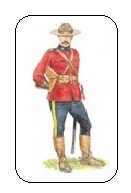
Reg.#2323 · Constable Everett “Klondike John” Ward · Vet of the Month · September 2025 · rcmpgraves.com Matr.#2323 · Gendarme Everett « Klondike John » Ward · Vétéran du Mois · Septembre 2025 · rcmpgraves.com
↑ Back to Top ↑ Retour en Haut ← Back to Vet of the Month ← Retour au Vétéran du Mois