Service File Dossier de service
- Reg. #Matr. # 12155
- Rank / RoleGrade / Rôle Marine Engineer · RCMP ‘Marine’ Division Ingénieur maritime · Division ‘Marine’ de la GRC
- NameNom Charles Mertaugh O’Leary
- BornNé 1899 · Nova Scotia 1899 · Nouvelle-Écosse
- RCNVSRCNVS Royal Canadian Naval Volunteer Service · Joined 1918 Service naval volontaire royal canadien · Enrôlé en 1918
- Dept. of FisheriesMinistère des Pêches Chief Engineer · 1919–1929 Ingénieur en chef · 1919–1929
- Dept. of National RevenueMinistère du Revenu national Transferred 1929 · Customs & Excise enforcement Transféré en 1929 · Application des lois douanières et d’accise
- RCMP Marine DivisionDivision maritime de la GRC Joined 1932 as Special Constable · Shore Engineer 1937 Entré en 1932 comme constable spécial · Ingénieur côtier 1937
- Royal Canadian NavyMarine royale canadienne Transferred 1945 · Rank of Commander · Deputy Superintendent, Halifax Dockyards 1952 · Captain 1952 Transféré en 1945 · Grade de commandant · Sous-surintendant, Chantiers navals d’Halifax 1952 · Capitaine 1952
- RetiredRetraite 1955 1955
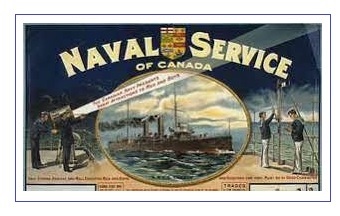
Charles Mertaugh O’Leary was highly representative of many Canadian men and women who were excellent citizens, who upheld the principles of democracy, and who devoted their entire lives to the service of Canada both in peacetime and in war.
O’Leary was born in Nova Scotia in 1899 and WWI broke out just over a decade later. In 1914, O’Leary was too young for overseas duty with the Canadian Expeditionary Force (CEF) but this hurdle did not inhibit him from making an admirable and significant contribution to Canada in other ways. Interestingly, O’Leary’s future career in marine law enforcement coincided not only with a growth in the Canadian Preventive Service (CPS), but also with fresh interest in law enforcement along Canada’s Atlantic coastline — more specifically the Canadian government intended to interrupt smuggling of goods and liquor, and this goal was tied into the collection of taxes.
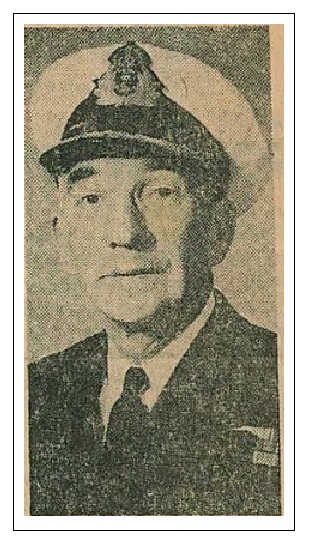
O’Leary decided to devote his life to the sea. His first goal was to become a Certified Marine Engineer and this achievement was followed by a long career in maritime law enforcement. His determination to succeed was evident, and his career on the sea continued over the years including assignments with the Royal Canadian Navy, the Department of Fisheries, and the Department of Customs and Excise. He was also one of the first members to join the RCMP ‘Marine’ Division.
As WWI came to a close in 1918, Charles O’Leary joined the Royal Canadian Naval Volunteer Service (RCNVS). He turned his attention to the ways of the sea and ships. At the time, Canada was at peace, but on the Atlantic seaboard there were excellent opportunities in marine law enforcement as well as promotion opportunities. In 1919, O’Leary transferred from the (RCNVS) to the Department of Fisheries (DOF) as their Chief Engineer, a post which he held for 10 years. All the while, his marine experience, and his skills became well known and he was sought after as a valuable asset. At the time, smuggling was on the rise, there was a growing need to deter those who purposely avoided customs and excise taxes, and the government intended to collect its revenue. The Liberal Government of the day proposed a formal review of its maritime operations on the Atlantic coast, and it sought recommendations on how to abate smuggling. Then an action plan was put into effect, and men including Charles O’Leary were assigned to carry it out.

In early 1927, the Department of Customs and Excise was renamed the Department of National Revenue, and along with a name change came very significant legal, administrative and operational changes. The action plan was designed to bolster the presence of marine law enforcement — armed ships and personnel on the Atlantic. In his article entitled The Origins and Growth of the Canadian Customs Preventive Service Fleet in the Maritime Provinces and Eastern Quebec, 1892–1932, author David J. McDougall said, “Based in part on discussions with Preventive officers on the east coast, the committee urged increased capital expenditures for vessels and automobiles; appointment of ‘District Directors’ (later called ‘District Chief Preventive Officers’); appointment of more land-based Preventive officers; revised procedures for prosecutions; amendments to existing legislation; international treaties to expand Canada’s territorial limits.” (p.47). And soon after these changes were announced, more expansion measures followed.
On the heels of the changes already mentioned there were huge expenditures for ships and personnel; David J. McDougall wrote, “Over the next eight months the strength of the CPS fleet was nearly doubled from fourteen cruisers and patrol boats and one hundred and seventy-seven men to twenty seven vessels and two hundred and thirty-four men. The first new vessels were three motor launches purchased in April, each about thirty feet long and capable of about twenty-two knots…” (p.47). In an attempt to demonstrate the seriousness of law enforcement some ships were heavily armed. David McDougall wrote, “Delivery of six new motor launches from a boat yard in Ontario began in September. Each was thirty-eight feet long with a mounted machine gun and a top speed of thirty-five knots.” (p.48). Overall, the new action plan provided confidence to the Department of National Revenue that it could carry out its mandate — strict marine law enforcement under the Customs and Excise Act on the Atlantic. The Department’s new personnel included Charles O’Leary as 1939 was the same year that O’Leary accepted another transfer into the Department of National Revenue. The enforcement of Customs and Excise laws would have fallen under his purview. For years, law enforcement authorities recognized that smuggling tended to increase when there were prohibitions against the import and sale of liquor, and the Department intended to do something about it.

In 1932, Canada’s Preventive Service was absorbed within the RCMP’s ‘Marine’ Division and O’Leary joined at the rank of Special Constable. In 1937, he was appointed Shore Engineer.
In 1945, Charles O’Leary transferred from the RCMP to the Royal Canadian Navy with the rank of Commander, and in 1952 he was appointed Deputy Superintendent of the Halifax Dockyards. Later the same year, he was appointed to the rank of Captain and he held this rank until he retired in 1955.
Looking back over Charles O’Leary’s career, he likely never imagined the diverse challenges in maritime law enforcement which he would face in his lifetime. His experiences included the disruption of rum-running on the Atlantic coast, the modernization of the Department of National Revenue and the creation of the RCMP ‘Marine’ Division. Charles O’Leary had a highly honourable career and he was a pioneer to whom all Canadians are indebted.
Reporting from Fort Healy,
J. J. Healy
March 23, 2021
References Références
McDougall, David J. (2000). The Northern Mariner. V(5). (pp. 37–57). The Origins and Growth of the Canadian Customs Preventive Service Fleet in the Maritime Provinces and Eastern Quebec, 1892–1932.
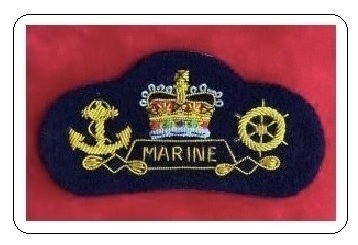
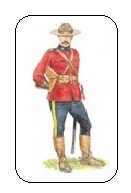
Reg.#12155 · Marine Engineer Charles Mertaugh O’Leary · Vet of the Month · April 2021 · rcmpgraves.com Matr.#12155 · Ingénieur maritime Charles Mertaugh O’Leary · Vétéran du Mois · Avril 2021 · rcmpgraves.com
↑ Back to Top ↑ Retour en Haut ← Back to Vet of the Month ← Retour au Vétéran du Mois