Service File Dossier de service
- Reg. #Matr. # 7547
- RankGrade Constable · RNWMP / RCMP Gendarme · PNRO / GRC
- NameNom William Harold McLaughlin
- BornNé August 8, 1887 · Waterloo, Québec 8 août 1887 · Waterloo, Québec
- Pre-RCMP ServiceService pré-GRC 8th U.S. Cavalry, Philippines, 1905–1908 · Deputy Sheriff’s Office, Sweetwater Co., Wyoming (4 years) · Dominion Police · Saskatchewan Provincial Police 8e Cavalerie américaine, Philippines, 1905–1908 · Bureau du shérif adjoint, comté de Sweetwater, Wyoming (4 ans) · Police du Dominion · Police provinciale de la Saskatchewan
- Joined RNWMPEntrée PNRO January 10, 1919 · Regina, SK 10 janvier 1919 · Regina, SK
- NotableNotable Undercover officer · Winnipeg General Strike, May–June 1919 · Key witness at seditious conspiracy trial · Cited by Prime Minister Borden Agent infiltré · Grève générale de Winnipeg, mai–juin 1919 · Témoin principal au procès pour conspiration séditieuse · Cité par le premier ministre Borden
- DischargedLibéré December 1920 · Post-service: Pioneer Detective Bureau, Winnipeg MB & Regina SK · Prison Guard, Prince Albert SK (1921) Décembre 1920 · Après service: Pioneer Detective Bureau, Winnipeg MB et Regina SK · Garde de prison, Prince Albert SK (1921)
- DiedDécédé June 15, 1927 · Brandon Provincial Jail · Age 39 · Cardiac hypertrophy 15 juin 1927 · Prison provinciale de Brandon · À 39 ans · Hypertrophie cardiaque
- BuriedInhumé Brandon Cemetery · Brandon, MB Cimetière de Brandon · Brandon, MB
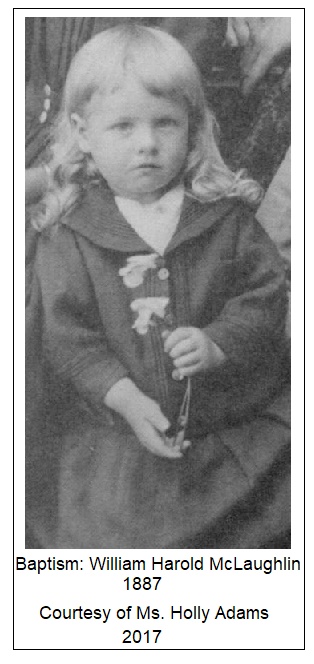
One can imagine my great surprise and delight when I read a recent note from Ms. Holly Adams living in England in which she said that she was related to Reg.#7547, Constable William Harold McLaughlin; Ms. Adams said, “Dear Joe; I read about your work in this week’s Canada’s History Newsletter and I immediately looked up my great-grandfather, William Harold McLaughlin. He died when my grandmother was very young and she never had a photograph of him, so I decided to see if I could find some and I was successful. I am enclosing the photos for you.”
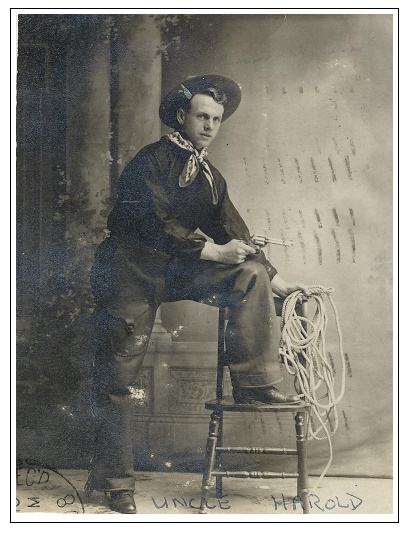
I am very grateful to Ms. Adams for contacting me, and I want to acknowledge the valuable details which she provided about her great grandfather William Harold McLaughlin. The following short story is dedicated to Constable McLaughlin with special mention of his participation as an undercover police officer and his subsequent testimony as a witness at a criminal trial after the historic Winnipeg Strike during May — June, 1919.
William Harold McLaughlin was born on August 8, 1887 at Waterloo, Québec. After his parents died, he moved to New Brunswick then he emigrated to the USA. He served with the 8th U.S. Cavalry in the Philippines from 1905 to 1908 and after the US Cavalry returned to the USA, he joined the Deputy Sheriff’s Office in Sweetwater Co., Wyoming where he served for four years in the capacity of a police officer.
Four years later in 1916, W. H. McLaughlin returned to Canada. He moved to Qu’Appelle, SK., where he found employment as a labourer and in December, 1916 he married Reta Eileen Darcy in Regina, SK. In the meantime, it was reported that he served briefly with the Dominion Police (DP) and also with the Saskatchewan Provincial Police (SPP).
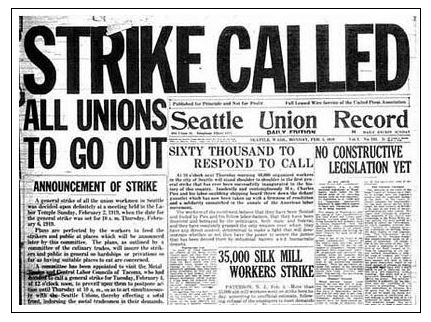
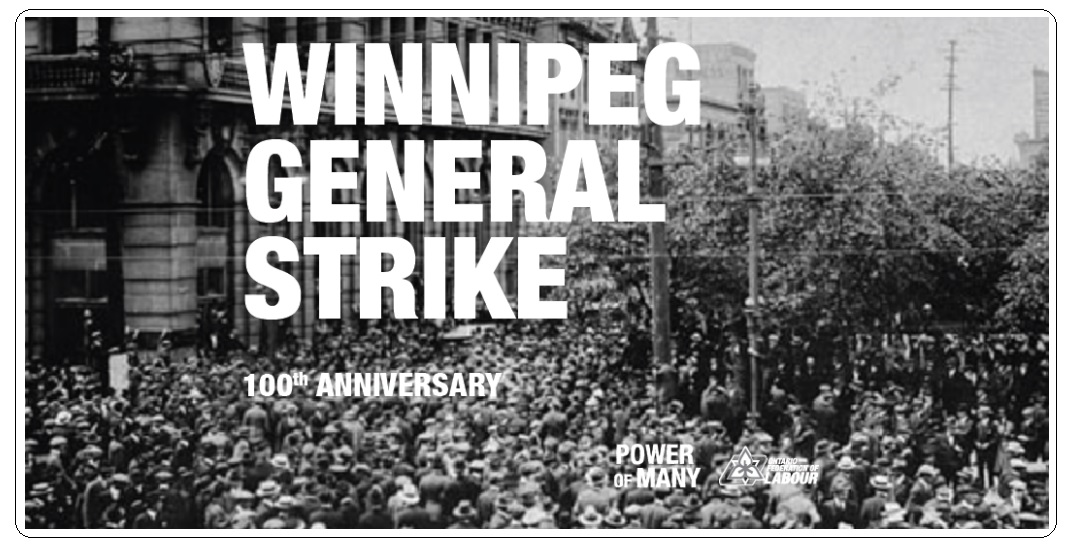
Constable McLaughlin engaged in the Royal North-West Mounted Police (RNWMP) on January 10, 1919 at Regina, SK. At the time, there was labour unrest across western Canada, and Constable McLaughlin was sent to Winnipeg, MB., where he served during one of the most famous and controversial strikes in Canadian history.
Soldiers returning home after the WWI could not find jobs, huge factories had shut down, and rising costs related to the war all contributed to Canada’s social unrest. Fortunately, Constable McLaughlin was not counted among the scores of causalities as a result of the strike getting out of control in Winnipeg, but in fact he served in the dangerous role of an undercover police officer with the responsibility to gather evidence to build a case of conspiracy involving the ring leaders. His work supported criminal charges being laid.
After the Strike, a group of eight labour leaders were charged for seditious conspiracy. The trial was sensational especially when the court heard that it was the mob’s intent to stir up 3,000 to 4,000 men and ready them to seize arms and take possession of the Minto barracks. All the while, however, Constable McLaughlin was disguised and acting within the group as a secret police agent. He befriended and listened to the illegal intended actions of one of the conspirators a certain Mr. R. E. Bray.
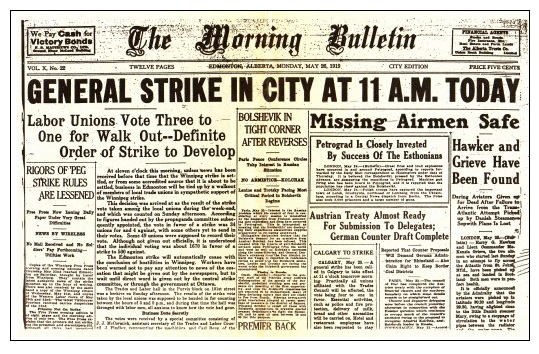
At trial, Detective McLaughlin’s report in part follows, as he testified in court, “In the continuation of my conversation with Bray he stated that this affair was going to end in a fight, and when I lamented the fact that we had no guns, Bray said, ‘Don’t worry about guns, we’ll have them. We have got between three and four thousand men ready and instructed to be in certain places when the alarm is sounded, and they will get into the citizens’ cars which are to carry the militia to Minto barracks, pass themselves off as militiamen until they get inside the barracks, get possession of the rifles, turn them on the real soldiers and seize the barracks.’” There was little doubt that Bray intended to act with violence.
In the end, Bray was acquitted on the charge of conspiracy but found guilty of common nuisance while five other conspirators were convicted of seditious conspiracy. The convictions were obtained due in part to the successful undercover work of Constable McLaughlin and his ability to gain close and intimate proximity to the conspirators in order to seek verbal testimony which was used in evidence.
After calm was restored in Winnipeg, Constable McLaughlin was transferred back to Prince Albert, SK., but he too may have been restless as he only served in the RCMP another year or so before he took his discharge in December, 1920. In 1921, he worked for the Pioneer Detective Bureau in Winnipeg, MB as well as in Regina, SK. By 1921 he and his family were living in Prince Albert, SK and on that year’s census he gave his occupation as a Prison Guard.
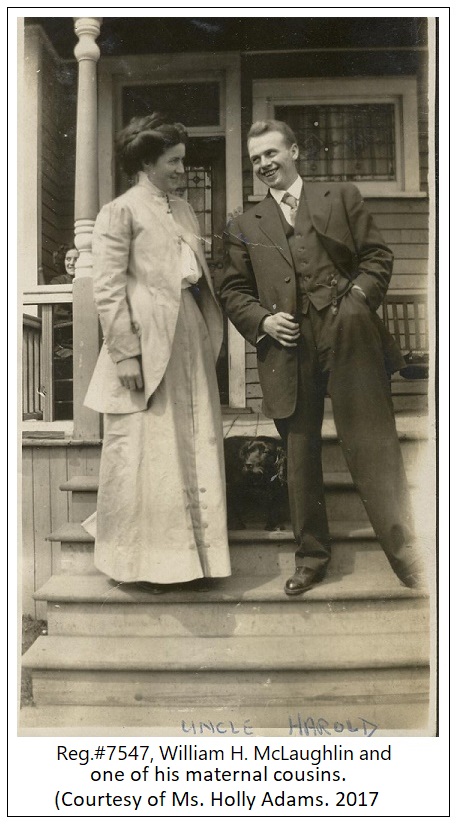
William Harold McLaughlin died at the age of 39 at the Brandon Provincial Jail on June 15, 1927. His cause of death was cited as cardiac hypertrophy.
Constable McLaughlin’s obituary in the Brandon Sun read, “The death occurred in the city Wednesday morning suddenly from heart trouble of William Harold McLaughlin, aged 40 years. Deceased is survived by his wife and three children. Funeral arrangements are not completed.” Few people may have realized that William Harold McLaughlin served honourably in the Force and his bravery resulted in him being granted a distinguished citation from Canada’s Prime Minister Borden.
Constable McLaughlin was buried with family in the Brandon Cemetery, Brandon, MB.
Source
Manitoba Free Press, Winnipeg, Wednesday, August 6, 1919, p. 4 — R. E. Bray Planned to Take Possession of Minto Barracks, Swears Detective.
Once again, I would like to thank Ms Holly Adams for contacting me from England and for providing me with the valuable and interesting background material on William Harold McLaughlin as well as the treasured photographs.
Reporting from Fort Healy,
J. J. Healy
December 23, 2017
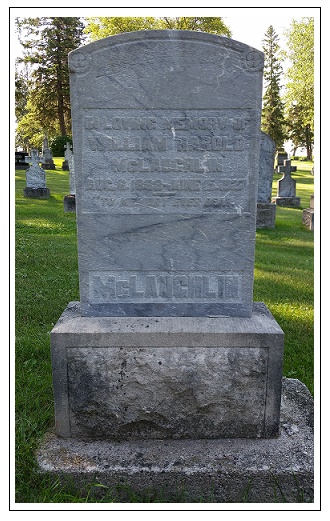
Reg.#7547, Constable William Harold McLaughlin died at the age of 39.
He was buried in the Brandon Cemetery. Brandon, MB.
Photo courtesy of Ms. Holly Adams. 2017
Reg.#7547 · Constable William Harold McLaughlin · Vet of the Month · December 2017 · rcmpgraves.com Matr.#7547 · Gendarme William Harold McLaughlin · Vétéran du Mois · Décembre 2017 · rcmpgraves.com
↑ Back to Top ↑ Retour en Haut ← Back to Vet of the Month ← Retour au Vétéran du Mois