Service File Dossier de service
- Officer No.No. officier O.212
- RankGrade Inspector · RCMP Inspecteur · GRC
- NameNom Thomas Edward Foster
- BornNé 1883
- Early CareerDébut de carrière Dominion Police, Ottawa, ON · Studied fingerprinting under J. K. Ferrier, New Scotland Yard, St. Louis USA 1904 Police du Dominion, Ottawa, ON · Étude des empreintes digitales sous J. K. Ferrier, New Scotland Yard, St. Louis, É.-U. 1904
- Joined RCMPEntrée GRC February 1, 1920 · Absorbed from Dominion Police into RCMP · Appointed Inspector & Officer in Charge, Fingerprint Bureau 1er février 1920 · Intégré de la Police du Dominion à la GRC · Nommé inspecteur et officier responsable du Bureau des empreintes digitales
- NotableNotable Founded RCMP Fingerprint Bureau · “Father of Fingerprinting in Canada” · Expert witness, Chicago murder trial 1911 · Co-founder, Chief Constables Association of Canada, Toronto, September 6, 1905 Fondateur du Bureau des empreintes digitales de la GRC · « Père des empreintes digitales au Canada » · Témoin expert, procès pour meurtre à Chicago, 1911 · Cofondateur, Association des chefs de police du Canada, Toronto, 6 septembre 1905
- RetiredRetraite July 1, 1932 · 42 years combined police service 1er juillet 1932 · 42 ans de service policier cumulé
- DiedDécédé January 21, 1956 · Buried at Beechwood Cemetery, Ottawa, ON 21 janvier 1956 · Inhumé au cimetière Beechwood, Ottawa, ON
Even the most renowned medical experts or the most experienced defence lawyers know that fingerprints do not lie. A fingerprint left by a suspect at the scene of a crime is a sure bet for a conviction. Other personal characteristics might be altered; hair colour, disguises, weight loss, amputations and tattoos to name just a few possibilities, but fingerprints are an indisputable means of personal identification. A fingerprint puts the suspect in the best seat and in the front row of the crime scene.
After a grizzly murder, many a man or woman have found their way to the gallows but for a partial or single fingerprint left at the scene of the crime. In 1911, one such case involved the founding father of the RCMP’s fingerprint system Inspector T. E. Foster. The celebrated murder and the ensuing criminal trial took place in Chicago, IL.

The trial was described in the November 2011 issue of the police journal Blue Line. Briefly, “T. E. Foster was among some fingerprint experts called to testify at the murder trial. The suspect’s defence lawyer questioned Foster on the witness stand, about the scientific reliability of fingerprints. Foster was so certain about science and his testimony that he lifted the lawyer’s fingerprints off a piece of paper. Another test followed. Even after the lawyer spilled water on the paper, the fingerprints remained evident. The jury was so convinced by Foster’s testimony, that in the end, the suspect was convicted and hanged for the offence.” (p.1) After the trial, T. E. Foster was assured not only of fame, but a future in the science and study of fingerprinting in Canada.
Thomas Edward Foster was born in 1883. After schooling, he joined the Dominion Police in Ottawa, ON. Foster’s curiosity and research caused him to think seriously about a formal, scientific approach to policing. In 1904, he went to the World’s Fair in St. Louis, Missouri, USA and it was here that he met Mr J. K. Ferrier of London’s New Scotland Yard. Ferrier had gained a solid reputation as an expert in fingerprinting, so T. E. Foster decided to remain in the US and to further study fingerprint identification under the tutelage of Mr. Ferrier.
This event marked the advent of fingerprinting in Canada. Upon his return to Canada in 1910, Thomas Foster was promoted to Inspector as the Officer in Charge of the new Fingerprint Bureau.
On February 1st, 1920, Inspector Foster was among three Dominion Police Officers to be absorbed into the RCMP, along with O.198, A. J. Cawdron and O.211, G. W. Kennedy. When the two police forces amalgamated, Thomas Foster was reappointed an Inspector in the RCMP, and he was appointed once again as the Officer In Charge of the Fingerprint Bureau.
Around the world, Thomas Foster was celebrated as Canada’s first fingerprint expert, and he organized the Bureau into what today is known as the RCMP’s Identification Bureau. Foster worked primarily out of ‘A’ Division in Ottawa.
There is no doubt that Inspector Foster was a full career police officer. He was also instrumental in the inauguration of the Chief Constables Association of Canada which held its first meeting in Toronto on September 6, 1905.
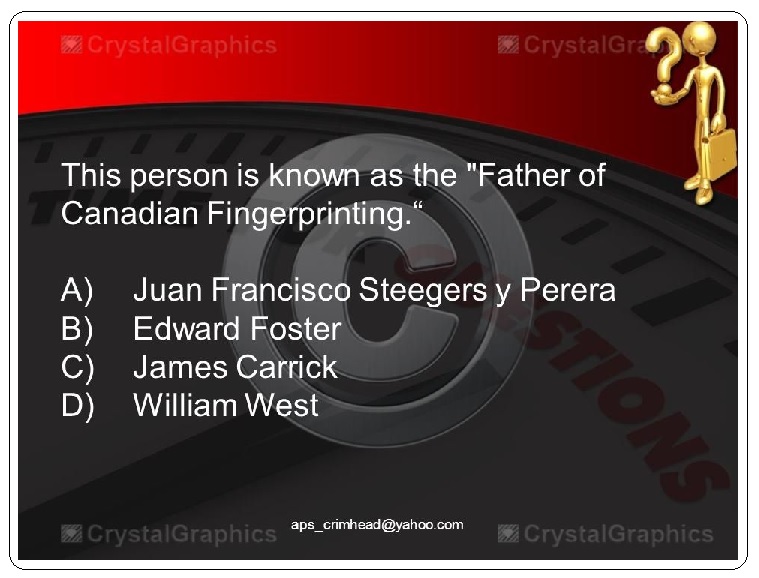
Due to his pioneering work in the field of fingerprinting in Canada, Inspector Foster is often referred to as the “Father” of Fingerprinting in Canada.
He retired on July 1, 1932 with a combined police service of 42 years.
Inspector Thomas Foster died on January 21st, 1956. He was buried in Beechwood Cemetery, Ottawa, ON.
Reporting from Fort Healy,
J. J. Healy
February 23, 2019
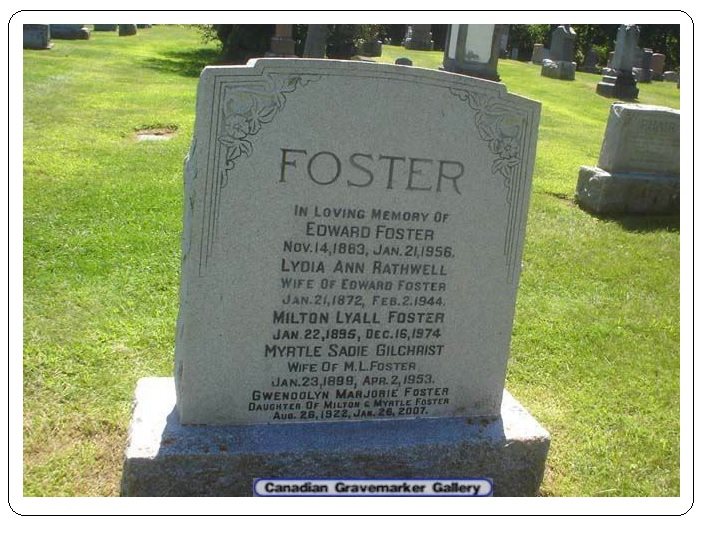
Photo courtesy of Merle Armstrong. RCMP Vets London, ON. Photo avec l’aimable autorisation de Merle Armstrong. Vétérans de la GRC London, ON.
References
Blue Line. November 17, 2011. Publisher. Adam Szpakowski. Toronto, ON.
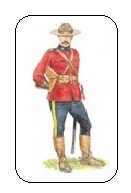
O.212 · Inspector Thomas Edward Foster · Vet of the Month · February 2019 · rcmpgraves.com O.212 · Inspecteur Thomas Edward Foster · Vétéran du Mois · Février 2019 · rcmpgraves.com
↑ Back to Top ↑ Retour en Haut ← Back to Vet of the Month ← Retour au Vétéran du Mois