Service File Dossier de service
- Officer No.No. officier O.134
- RankGrade Inspector · NWMP / RNWMP / RCMP Inspecteur · NWMP / RNWMP / GRC
- NameNom George Stevens
- BornNé September 19, 1844 · Ireland 19 septembre 1844 · Irlande
- Reg. #Matr. # 1186A · (Originally assigned #1186; corrected to #1186A due to administrative duplication) 1186A · (Initialement assigné le #1186 ; corrigé en #1186A en raison d’un doublon administratif)
- Joined NWMPEntrée NWMP April 1, 1885 · Ottawa, ON · Age 40 · Rank of Staff Sergeant 1er avril 1885 · Ottawa, ON · À 40 ans · Grade de sergent-major
- PostingAffectation Office of the Comptroller, Ottawa, ON · Entire career Bureau du contrôleur, Ottawa, ON · Toute sa carrière
- PromotedPromu Inspector, c. 1903 · On recommendation of Comptroller Fred White · Directed by Commissioner A. B. Perry Inspecteur, vers 1903 · Sur recommandation du contrôleur Fred White · Ordonné par le commissaire A. B. Perry
- NotableNotable Never took a vacation in 31 years · Served through NWMP, RNWMP & RCMP · Promotion to Superintendent denied despite strong support N’a jamais pris de vacances pendant 31 ans · A servi sous la NWMP, la RNWMP et la GRC · Promotion au grade de surintendant refusée malgré un fort appui
- RetiredRetraité April 30, 1920 · 35 years service · Age 75 · Pension: $1,557.50 per year 30 avril 1920 · 35 ans de service · À 75 ans · Pension : 1 557,50 $ par année
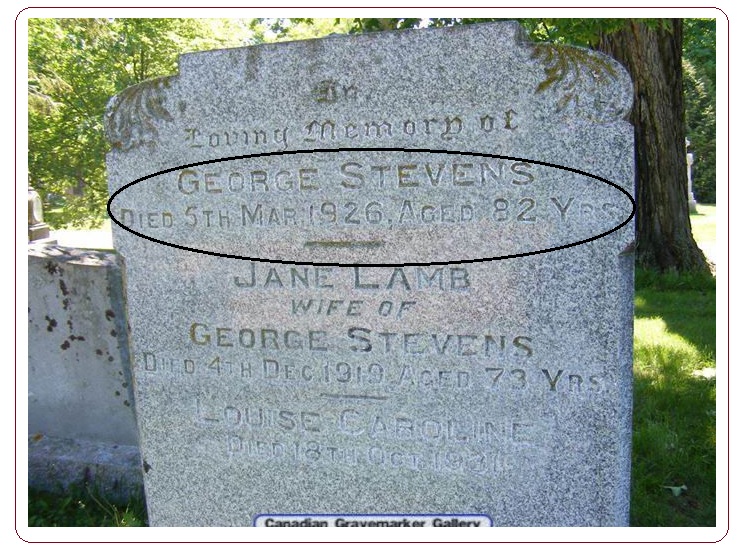
- DiedDécédé March 5, 1926 · Age 82 · Buried at Beechwood Cemetery, Ottawa, ON 5 mars 1926 · À 82 ans · Inhumé au cimetière Beechwood, Ottawa, ON

George Stevens was born in Ireland on September 19, 1844. He immigrated to Canada, and he joined the North West Mounted Police (NWMP) at Ottawa, ON, on April 1, 1885 — he was 40 years of age. Although noticeably older than a regular applicant for the NWMP, George Stevens was accepted into the ranks of the NWMP with solid work credentials. He was reputed to be a hard worker, passionate about the NWMP, honest and ethical.
Upon his engagement into the Force, Stevens was given the rank of Staff Sergeant and posted to the Office of the Comptroller in Ottawa. As it turned out, his immediate supervisor, Mr. Fred White, was very well known in Ottawa circles and it was here that George Stevens spent his entire career which spanned many, many years. Over time, Mr. White and George Stevens formed a close friendship and a highly professional working bond. It was said that the pair were ‘threads of the same cloth’ — the two shared an intense work ethic, long hours of work and weeks of travel away from home. Unquestionably, their sole cause was their devotion to the NWMP.
On the day that George Stevens was sworn into the NWMP, he was assigned Reg.#1186, but there was an administrative mix-up in the Regimental numbering system, and due to the confusion, it was soon discovered that Reg.#1186 had already been assigned to another constable. To correct the duplication, George Stevens was assigned a most unusual and odd number — Reg.#1186A.
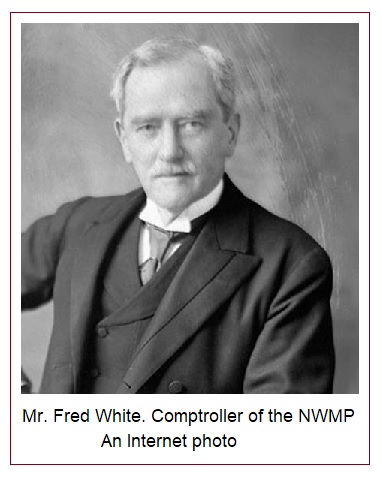
By about 1903, George Stevens was being considered for promotion to Inspector. He was 59 years of age, and he had served faithfully with the NWMP for about 19 years. In spite of his age, he had strong support for the promotion from the powerful and influential Mr. Fred White.
In support of the promotion, Fred White drafted a letter to government in which he wrote that Staff Sergeant Stevens had been employed at Ottawa in connection with the control of expenditures since 1st April, 1885, and that it frequently happened that it would be in the interest of the public service if he could be sent to the North West or the Yukon in performance of specific duties. White noted that those duties could not be efficiently carried out in Stevens’ present subordinate rank of NCO, and that his usefulness would be much increased by giving him the rank of Inspector.
An influential and deliberate pull from the top was all that was required. Fred White’s recommendation was wholly accepted — George Stevens’ promotion was approved and soon after Commissioner A. B. Perry directed that George Stevens be raised from Staff Sergeant to Inspector.
The police career of George Stevens was most unusual. It is noteworthy that he never took a day’s vacation throughout his long service in the NWMP. In 1916, however, Inspector Stevens requested three months leave with pay, and he penned that it was his first request for vacation in 31 years. His request was immediately granted.
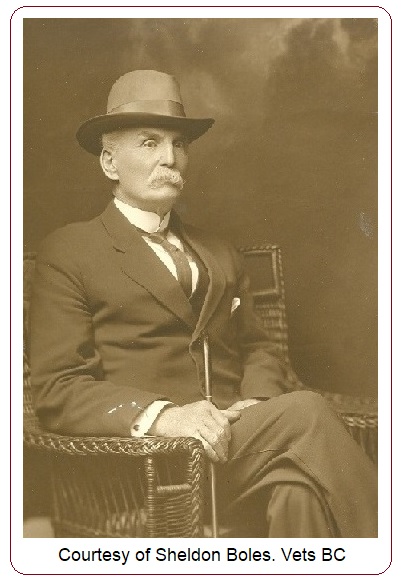
In 1917, a vacancy at the rank of Superintendent arose due to a retirement of another NWMP Officer. At the time, Inspector Stevens was #3 on the Seniority Roll of Inspectors. He wrote to the Acting Comptroller and emphasized his long service and dedicated career with the NWMP, as well as the fact that all his requests for operational experience had been refused, and that he was deserving of the promotion to Superintendent. Inspector Stevens also mentioned that the promotion to Superintendent would have favourable financial and pension consequences for himself and for his wife.
It was quite obvious that he had strong support from the Acting Comptroller, who wrote in his assessment that Stevens had over 32 years of service to his credit and would be 73 years old on the 19th instant (1917). The Acting Comptroller described Stevens’ duties as associated with the control of expenditures of the Force and the classification and preparation of vouchers for the Audit Office, and praised his exemplary conduct as a steady and conscientious worker. He added that he could not say enough on Stevens’ behalf, while noting that Inspector Stevens was too old to take command in the field, and suggesting that if his case were given favourable consideration, he be promoted as ‘supernumerary’ for duty in Ottawa.
However, in spite of a favourable assessment and his influential connections, his hopes of promotion were crushed — his promotion to Superintendent failed. Undoubtedly, it was a blow to his spirits which he had not anticipated. Yet, in spite of the set-back, he continued to serve as he had done his entire life. He never allowed the inner hurt to outwardly affect his devotion to the NWMP.
Inspector Stevens celebrated his 75th birthday on September 19, 1919. A few months later, his 73-year-old wife passed away, and it seemed that her death caused Inspector Stevens to pause and to consider retirement. In 1920, he announced his retirement, and the Acting Comptroller returned the following note to Inspector Stevens:
“I regret very much that on account of your health you have to leave the service of the Department where you have given such long and faithful service. I have recommended that you be granted three months leave with pay, and be given your retiring allowance. You may rest assured that I have the most sincere wishes for your success and future happiness.”
Inspector Stevens’ three months Annual Leave began on April 30, 1920, and he formally retired with 35 years good and honourable service with the Force. His pension was calculated at $1,557.50 per year. Interestingly, he was one of a handful of men who served through the days of the NWMP, the RNWMP and the RCMP.
Inspector George Stevens died on March 5, 1926. He was 82 years of age.
He was buried in Beechwood Cemetery in Ottawa, ON.
Reporting from Fort Healy,
J. J. Healy
June 23, 2019

O.134 · Inspector George Stevens · NWMP, RNWMP & RCMP · Vet of the Month · June 2019 · rcmpgraves.com O.134 · Inspecteur George Stevens · NWMP, RNWMP & GRC · Vétéran du Mois · Juin 2019 · rcmpgraves.com
↑ Back to Top ↑ Retour en Haut ← Back to Vet of the Month ← Retour au Vétéran du Mois